Before 1527
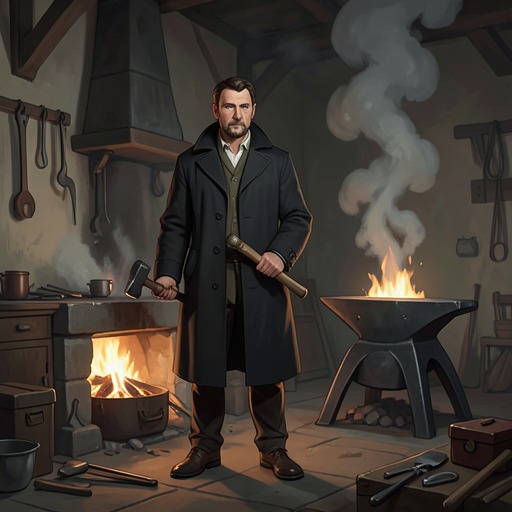
Cromwell Marries Liz
Cromwell wins the confidence of [Henry Wykys](entity:character-recall-character-henry-wykys-5a055f53205e) by reviving the older man’s failing wool business. He improves the accounts, replaces an ineffective clerk, and restores the enterprise to profit, demonstrating the practical talent that will distinguish him from traditional courtiers.
When Wykys calls Lizzie downstairs and proposes Cromwell as her new husband, she accepts after a brief exchange. Their marriage brings him a household, city connections, and a son, Gregory; Cromwell promises himself that he will treat the child with a tenderness he never received from Walter.
1527
Cromwell Enters Wolsey’s Service
In [London](entity:location-recall-location-1bfd335cdd1b), Cromwell serves as [Thomas Wolsey](entity:character-recall-character-thomas-wolsey-b0310b090d30)’s lawyer and business manager, moving easily between the cardinal’s political work, the courts, the docks, and financial markets. He returns from a difficult journey through [Yorkshire](entity:location-recall-location-aec346f1fc36) and reports that the cardinal’s plan to reorganize small monasteries is meeting resistance from people who want the proceeds for themselves.
Wolsey trusts Cromwell with confidential information and asks him to cultivate contacts in [Katherine of Aragon](entity:character-recall-character-katherine-of-aragon-4793debf8c17)’s household. Their relationship is close but not equal: the cardinal’s wit and ambition command Cromwell’s loyalty, while Cromwell’s practicality helps turn Wolsey’s schemes into action.
1527
The King’s Great Matter
[Henry VIII](entity:character-recall-character-henry-viii-bebc59c40e44) tells Wolsey that he doubts the legality of his marriage to [Katherine of Aragon](entity:character-recall-character-katherine-of-aragon-4793debf8c17) because she had been married to his brother Arthur. He wants an annulment and a son, and insists that the marriage has left him living in sin. Wolsey hopes to manage the king’s scruples through a church court and, if necessary, diplomacy with [Rome](entity:location-recall-location-f3877a21016f) and [France](entity:location-recall-location-4f282e1af8a7).
Cromwell questions the weakness of the legal case and warns that the [Roman Curia](entity:organization-recall-organization-roman-curia-2ef5b853a35f) will understand that money and power are at stake. The king’s demand begins a crisis that will transform the church, the monarchy, and Cromwell’s own place in government.
Christmas 1521 and the following years
Anne Boleyn at Court
[Anne Boleyn](entity:character-recall-character-anne-boleyn-528b79b5c84b) arrives at court after her upbringing in [France](entity:location-recall-location-4f282e1af8a7) and becomes the focus of a circle of admirers. Wolsey orders her father, [Thomas Boleyn](entity:character-recall-character-thomas-boleyn-ca7d20c63283), to end her attachment to [Henry Percy](entity:character-recall-character-henry-percy-badd1868625d), whose marriage to Mary Talbot has already been arranged for political reasons.
Percy’s resistance is broken by his father and by Wolsey’s authority; Anne is sent away, but she later returns to court. Cromwell watches the episode become one of the hidden histories beneath the king’s marriage crisis: the woman Henry wants has already learned how power can be used to shape her future.
1527–1528
The King Pursues Anne
Henry’s interest shifts from [Mary Boleyn](entity:character-recall-character-mary-boleyn-ede1ec1378f0) to her younger sister Anne. Anne refuses to become merely another royal mistress, and her family sees the possibility of a marriage that could transform its position. Cromwell hears the court’s rumors and recognizes that the king’s desire is increasingly entangled with his wish to escape his marriage to Katherine.
Wolsey tries to keep the king’s cause separate from Anne’s ambitions, but the distinction grows harder to maintain. Anne’s refusal becomes a political force, while Cromwell begins to understand that the king’s private will may soon remake the law and the church.
May 1527
The Sack of Rome
Imperial troops sack [Rome](entity:location-recall-location-f3877a21016f), plundering churches, killing civilians, and taking [Pope Clement VII](entity:character-recall-character-pope-clement-vii-ff0d0e8361e2) prisoner. The catastrophe makes a favorable papal judgment on Henry’s marriage far less likely, since the pope is now under the influence of Katherine’s nephew, [Charles V](entity:character-recall-character-charles-v-b6728d8ac171).
Wolsey proposes an ambitious plan to negotiate in [France](entity:location-recall-location-4f282e1af8a7) and convene churchmen elsewhere, hoping to keep the king’s case alive. Cromwell understands that diplomacy is being reshaped by violence and money, and that every delay gives Anne’s position more time to harden.
1527–1528
Cromwell’s Household Takes Shape
At [Austin Friars](entity:location-recall-location-austin-friars-eb650e5b3cb1), Cromwell builds a household around his wife, children, relatives, clerks, and protégés. He brings the young [Rafe Sadler](entity:character-recall-character-rafe-sadler-eb119f0e3a82) into his care, teaching him work and responsibility, and welcomes family members who need support. The house is busy with merchants, scholars, musicians, and visitors from across Europe.
Cromwell’s interest in the English Bible grows as he studies reforming texts and keeps [William Tyndale](entity:character-recall-character-william-tyndale-8185db743b1d)’s New Testament hidden at home. He does not yet want his household drawn into danger, but he is increasingly skeptical of doctrines and practices that have no clear basis in scripture.
Summer 1528
The Sweating Sickness Takes Liz
The sweating sickness returns to [London](entity:location-recall-location-1bfd335cdd1b), and Cromwell spends a day away from home meeting scholars and merchants. When he reaches [Austin Friars](entity:location-recall-location-austin-friars-eb650e5b3cb1), he learns that [Liz Wykys](entity:character-recall-character-liz-wykys-1552cd2eccff) has died within hours of falling ill. She had asked for him and urged the household to look after the children, but he had not been found in time.
Cromwell cannot make sense of the sudden loss. He reads, grieves, and tries to care for the children, while Rafe stays close. Liz’s death becomes a lasting absence in his life and an early lesson in how little power even a capable man has over mortality.
Late 1528
Cromwell Saves Bilney
After learning that two young scholars, Clerke and Sumner, died of plague while confined in the cold cellar of Wolsey’s college, Cromwell asks Wolsey to secure the release of [Thomas Bilney](entity:character-recall-character-thomas-bilney-064e4bccfc8c) from the Tower. Wolsey agrees on condition that Bilney return to [Cambridge](entity:location-recall-location-cambridge-9c17d42a788b) and stop seeking an audience with the pope.
Cromwell’s request reveals a limit to his loyalty to institutional authority: he may disagree with reformers, but he is appalled by preventable suffering. Wolsey’s intervention gives Bilney another chance, though it cannot protect him permanently from religious persecution.
Autumn 1528
Mary Boleyn’s Appeal
[Mary Boleyn](entity:character-recall-character-mary-boleyn-ede1ec1378f0) tells Cromwell that she has been left without money or protection after the king turns his attention to Anne. She worries about her children and describes the king’s love letters to her sister, including his habit of drawing a heart where he should sign his name.
Mary hints that she wants a husband who can defy her powerful family. Cromwell refuses to take advantage of her vulnerability, but he sees that the Boleyns may use people as readily as they discard them. Rumors that Mary is pregnant soon make him wary of the family’s schemes.
May 1527, with proceedings continuing into 1529
The Legatine Court Opens
Wolsey opens a secret court to examine Henry’s marriage, summoning the king to produce the dispensation that allowed him to marry his brother’s widow. Katherine resists the process and insists that she was a virgin when she married Henry. Her lawyers challenge the court’s authority and argue that her case is already before [Rome](entity:location-recall-location-f3877a21016f).
At [Blackfriars](entity:location-recall-location-blackfriars-15826043dbad), Katherine appears in person and publicly asserts her marriage and her status. Witnesses later offer crude recollections of Arthur’s wedding night, but the proceedings cannot establish the truth with certainty. The court’s failure leaves the king’s marriage unresolved and makes Wolsey’s position increasingly precarious.
October 1529
Wolsey Loses the Great Seal
The dukes of Norfolk and Suffolk arrive at [York](entity:location-recall-location-york-6b9d2a502b1a) Place to remove Wolsey as Lord Chancellor and demand the Great Seal. Cromwell briefly delays them by insisting on the proper legal procedure, but the king’s men return the next day and strip the cardinal’s palace of its furnishings and papers.
Wolsey leaves for [Esher](entity:location-recall-location-953a6384dcd7) with a reduced household and uncertain prospects. The king’s men seize his possessions, while Londoners jeer at his departure. Cromwell stays beside his former master, organizing food, money, and shelter as Wolsey’s political world collapses.
Autumn 1529
The King Sends Comfort
As Wolsey travels upriver from [York](entity:location-recall-location-york-6b9d2a502b1a) Place, the king sends [Harry Norris](entity:character-recall-character-harry-norris-442b4f188a1a) with a ring and a message of comfort. Wolsey kneels in the mud, kisses the ring, and gives Norris a relic from his own neck. Cromwell hears promises of future recompense but suspects that the king’s kindness is mainly a gesture.
At [Esher](entity:location-recall-location-953a6384dcd7), Cromwell turns an impoverished house into a workable residence and keeps the cardinal’s servants paid. He remains loyal despite the collapse of Wolsey’s power, a decision that will distinguish him from men who move quickly to serve the king’s new favorites.
All Hallows 1529
The Fall of Wolsey’s Household
At [Esher](entity:location-recall-location-953a6384dcd7), Cromwell grieves for his own losses and admits to [George Cavendish](entity:character-recall-character-george-cavendish-21b789ae0964) that he may lose everything by staying loyal to Wolsey. He sends Rafe to find him a seat in Parliament, then arranges a way to pay the cardinal’s servants by drawing on the wealth of his chaplains.
The moment becomes a turning point. Cromwell decides that he must act politically on Wolsey’s behalf, while also securing a place from which he can survive the cardinal’s fall. His refrain, “make or mar,” marks the risk he is about to take.
Winter 1529–1530
Cromwell Enters Parliament
Rafe secures Cromwell a seat for Taunton, with the king and Norfolk allowing his election. Norfolk believes Wolsey has hidden treasure and expects Cromwell to work for him, but Cromwell maintains his loyalty to the fallen cardinal while learning how the new political order may be navigated.
In Parliament, Cromwell speaks against the king’s proposed war with [France](entity:location-recall-location-4f282e1af8a7) and argues that [England](entity:location-recall-location-edbf4fdebc64) cannot afford a campaign. His ability to translate commercial calculation into political argument brings him to Henry’s attention, even as his former patron’s enemies prepare accusations against Wolsey.
Early 1530
Henry Tests Cromwell
Henry questions Cromwell about his speech against war and challenges his claim that [England](entity:location-recall-location-edbf4fdebc64) cannot afford a campaign in [France](entity:location-recall-location-4f282e1af8a7). Cromwell replies that war consumes a kingdom’s resources and that geography and supply lines matter more than a prince’s desire for glory.
Henry is impressed by Cromwell’s financial knowledge and bluntness, though he warns that the man’s reputation is bad. Cromwell leaves with a new sense that the king may use him, but not yet trust him; the meeting opens a channel that will later carry him into the center of government.
November 1530
Wolsey Dies at Leicester
Wolsey is arrested at Cawood on a charge of high treason, shortly before his planned enthronement at [York](entity:location-recall-location-york-6b9d2a502b1a). He is taken south through Pontefract, Doncaster, and [Sheffield Park](entity:location-recall-location-c91a211439fb), then falls ill at [Leicester Abbey](entity:location-recall-location-f4cef954a62f). He dies after days of pain and fasting, with [George Cavendish](entity:character-recall-character-george-cavendish-21b789ae0964) beside him.
Cavendish tells Cromwell that Wolsey died asking about him and wondering whether he was on the road. Cromwell is devastated, but hides his grief behind the practical work of settling the household and protecting the cardinal’s memory. He keeps Wolsey’s turquoise ring, a final private token of their bond.
Christmastide 1530
The Cardinal’s Descent into Hell
At a court entertainment, actors perform a grotesque comedy in which a scarlet figure representing Wolsey is dragged into Hell. The spectacle turns the fallen cardinal’s humiliation into public amusement, while Henry and Anne watch from the hall.
Cromwell follows the actors behind the screens and finds Master Patch, the fool who had been taken from Wolsey, stripped of the costume. Patch taunts him about their shared low birth and warns that power turns over quickly. The scene deepens Cromwell’s distrust of the court’s appetite for cruelty and its readiness to mock yesterday’s master.
1530–1531
Cromwell Takes Wolsey’s Place
After Wolsey’s death, Cromwell continues to serve Henry while remaining wary of the courtiers who benefited from the cardinal’s fall. He brokers loans, manages grants, and intervenes in matters from the royal household to the care of the king’s hounds.
He begins to act as a political problem-solver, translating the king’s wishes into practical arrangements. His growing access to Henry makes him valuable to [Anne Boleyn](entity:character-recall-character-anne-boleyn-528b79b5c84b)’s circle as well, although he understands that any favor at court may be withdrawn abruptly.
Last night of 1530
The King’s Dream of Arthur
Henry summons Cromwell and [Thomas Cranmer](entity:character-recall-character-5fcc5424dc3b) after dreaming that his dead brother Arthur appeared to accuse him of taking Arthur’s kingdom and wife. Henry fears the dream is a divine judgment on his marriage and his kingship.
Cromwell interprets the apparition as a charge to exercise royal power, arguing that the dead prince’s authority passed to Henry at the moment of his death. Cranmer cautiously supports the interpretation. Henry leaves the meeting reassured, and Cromwell’s ability to turn a private fear into a political instrument becomes newly apparent.
Last day of 1530
Cromwell Becomes a Councillor
At the end of [1530](entity:time-recall-time-1530-b6951602e37d), Cromwell is sworn into the king’s council. [Thomas More](entity:character-recall-character-thomas-more-20df2b111ad7) reads the oath, while [Stephen Gardiner](entity:character-recall-character-stephen-gardiner-dda2a48fb837) arrives late and observes the ceremony. Cromwell pledges to uphold Henry’s authority and his heirs, though the succession remains uncertain.
The appointment completes a major shift in his fortunes. The son of a blacksmith now sits among the realm’s governing men, but his advancement is inseparable from the king’s struggle with [Rome](entity:location-recall-location-f3877a21016f) and from the possibility that the old order will be dismantled.
Spring 1531
Anne Presses Her Cause
Cromwell visits [Anne Boleyn](entity:character-recall-character-anne-boleyn-528b79b5c84b) at [York](entity:location-recall-location-york-6b9d2a502b1a) Place and argues that Wolsey remains the one man capable of securing a favorable judgment in [Rome](entity:location-recall-location-f3877a21016f). Anne resents the slow progress and insists that the cardinal had obstructed her cause; Cromwell counters that Wolsey alone can deliver what she and the king want.
Their conversation establishes a pragmatic, uneasy alliance. Anne begins to treat Cromwell as a political instrument she may need, while he recognizes that her rise could create a world in which his own low birth no longer defines the limits of his power.
Spring 1531
Cromwell’s Mother of the House
Cromwell brings [Jane Seymour](entity:character-recall-character-da7a8ea00fe5) a book of needlework patterns and learns that her family is caught in a scandal involving her father, Sir John Seymour, and his son Edward’s wife. [Anne Boleyn](entity:character-recall-character-anne-boleyn-528b79b5c84b)’s household is full of women who bear the consequences of men’s sexual and political choices.
Cromwell observes the young Jane closely but does not yet act on any interest in her. Her quietness and the violence of the Seymour family’s private life place her in the background of court politics, where she may later become important.
1531
Cromwell’s Public Mask
As Londoners gather outside [Austin Friars](entity:location-recall-location-austin-friars-eb650e5b3cb1) to watch the king’s advisers come and go, Cromwell learns to arrange his face before leaving home. He gives bread and broth to the poor, trains kitchen boys, and builds a household capable of supporting his expanding political work.
The outward courtesy conceals a careful observer who studies other people’s hesitation before they become courtly and compliant. Cromwell sees that reputation, service, and controlled appearances are as necessary to power as law or money.
15 May 1532
The Submission of the Clergy
The bishops submit to Henry, agreeing not to make church legislation without royal permission and accepting a review of existing laws by a commission that includes laymen. This concession weakens the church’s independent authority and moves [England](entity:location-recall-location-edbf4fdebc64) further from [Rome](entity:location-recall-location-f3877a21016f).
Cromwell helps shape the political pressure behind the submission. He understands that the measure is not merely a temporary compromise: it creates a precedent for the king’s control over the clergy and prepares the way for legislation that will make royal supremacy real.
1531–1532
Cromwell Seeks a Bible for England
Cromwell and [Anne Boleyn](entity:character-recall-character-anne-boleyn-528b79b5c84b) explore whether [William Tyndale](entity:character-recall-character-william-tyndale-8185db743b1d) might return to [England](entity:location-recall-location-edbf4fdebc64) if the king permits an English Bible. Tyndale says he longs to come home but will not trust a safe conduct while More remains in office, and he refuses to support Henry’s divorce.
Cromwell ultimately tells his contact [Stephen Vaughan](entity:character-recall-character-2e5d900f1323) to abandon the plan. Tyndale’s uncompromising convictions and Henry’s unwillingness to risk public conflict make the proposed return impossible. The failed negotiation exposes the tension between reforming scripture and serving a king who wants religious change on his own terms.
1531–1532
The Holy Maid’s Warnings
The nun [Elizabeth Barton](entity:character-recall-character-ecacfc056ea1), known as the Kent Nun, warned that Henry would die if he married Anne, and pointed out possible royal relatives who might inherit the throne. Her prophecy attracted influential supporters, including [John Fisher](entity:character-recall-character-3f01563ffa32) and members of the Courtenay family, and may have made religious faith a focus of
1532
The Percy Marriage Is Denied
Harry Percy was brought before the king's council and forced to swear that he had never been engaged to [Anne Boleyn](entity:character-recall-character-anne-boleyn-528b79b5c84b) and had never had sexual relations with her. Previously, Thomas Cromwell had questioned him about his debts and the political consequences of continuing to hinder Anne's prospects. The public swearing cleared
1 September 1532
Anne Becomes Marchioness
At [Windsor](entity:location-recall-location-windsor-5401b1428f24), [Anne Boleyn](entity:character-recall-character-anne-boleyn-528b79b5c84b) was made Countess of Pembroke, with the title and income arranged with the help of Cromwell. The ceremony elevated her status above many noblewomen in the kingdom, also confirming Henry's intention to regard her as someone outside the realm of the royal mistress. Crom
October 1532
The King Meets Francis
Henry met with [Francis I](entity:character-recall-character-francis-i-7b9e59cc4f78) in [France](entity:location-recall-location-4f282e1af8a7), hoping to gain support for Henry's marriage plans. Anne accompanied English courtiers but was excluded from formal royal meetings; the French court's cold treatment of her embarrassed Henry and made him angry. Cromwell was in charge of negotiations and observed the performances of the two
25 January 1533
Henry and Anne Marry
Henry and Anne were secretly married in the Palace of Whitehall, officiated by Roland Lee, with only a small group of witnesses present. Anne's sister Mary attended, and William Breton warned Cromwell not to interfere in the affairs of the Bolingbroke family. Cromwell returned to work
Early 1533
Cranmer’s Secret Marriage
Cromwell discovered that [Thomas Cranmer](entity:character-recall-character-5fcc5424dc3b) had secretly married a German woman named Margaret and that she was already pregnant. Cranmer asked Cromwell to help him keep the marriage and the pregnancy a secret during his time as Archbishop of [Canterbury](entity:location-recall-location-56a20db29f5b). Cromwell arranged for Helen Bar to secretly care for Margaret. His
After Easter 1533
The Act in Restraint of Appeals
After [Easter](entity:time-recall-time-easter-4ee721615d13), the Parliament passed the "Act for the Restriction of Appeals to [Rome](entity:location-recall-location-f3877a21016f)," which prohibited appeals of ecclesiastical matters to Rome. Now, Cranmer can decide Henry's marriage case in [England](entity:location-recall-location-edbf4fdebc64), and the power of the Pope to intervene directly has been removed. Cromwell's legislative
June 1533
Anne Is Crowned Queen
Anne participated in a grand parade in [London](entity:location-recall-location-1bfd335cdd1b) and was crowned Queen of [England](entity:location-recall-location-edbf4fdebc64) in a ceremony at [Westminster Abbey](entity:location-recall-location-c8a6789fb0b0). The court arranged the event as a public display of royal legitimacy, although many Londoners still remained loyal to Catherine and were doubtful about the new queen. Henry proudly watched Anne's coronation and gave
1533
Katherine Rejects Her Dowager Title
Cromwell visited Catherine at Ampthill and told her that she must accept the title of Queen Consort of Wales and leave Henry's court. Catherine refused this arrangement, insisting that she remained the Queen, and refused to acknowledge the validity of the king's marriage to Anne. Cromwell warned her that
7 September 1533
Elizabeth Is Born
Annie gave birth to a daughter, Elizabeth, rather than the son Henry had hoped for. The king initially restrained his disappointment, thanked God for the child, and ordered her to be named Elizabeth; privately, he was sad that he had no male heir. Cromwell was responsible for adjusting the public
Autumn 1533
Barton Confesses Her Fraud
Cromwell interrogated [Elizabeth Barton](entity:character-recall-character-ecacfc056ea1) and her supporters, gradually isolating the nun from the priest and monks who guided her in making public prophesies. During her interrogation, Barton admitted that her visions, voices, miracles, and letters allegedly sent to her by Mary Magdalene were all fabricated or
November 1533
Barton’s Public Penance
Patton and her main supporters publicly confessed before the Cross of São Paulo, her testimony was read aloud to a large crowd. She asked the people of [London](entity:location-recall-location-1bfd335cdd1b) to pray for her and begged the king's forgiveness; Cromwell watched this performance, arranged by him, intended to undermine her prophetic authority
1533
Mary Boleyn Marries Stafford
[Mary Boleyn](entity:character-recall-character-mary-boleyn-ede1ec1378f0) married [William Stafford](entity:character-recall-character-5ac4f3bfe700) without her family's consent, leaving the court and settling in Kennington. Anne was furious, believing that her sister was deliberately opposing her, and also worried that the child Mary was expecting would become another threat to the queen's position. Cromwell realized that this
Late 1533–early 1534
The Holy Maid’s Followers Face Attainder
Cromwell drafted a bill to deprive Patton and her supporters of their civil rights, including clerics and noble members who helped spread her prophecy. He tried to avoid a wide-scale public trial and instead preferred to expose this political network and punish its key figures. This measure indicated that the government was
Early 1534
Cromwell Becomes Vicegerent
Henry appointed Cromwell as deputy regent for religious affairs, making him a deputy to the king in handling church matters. This position granted Cromwell the power to inspect, examine, and reform monasteries, as well as to close monasteries deemed in poor condition or insufficiently loyal by the
1534
The Succession Bill
Cromwell drafted a bill to ensure that the children of Henry and Anne would inherit the throne, excluding Mary from the line of succession. The bill required subjects to swear an oath acknowledging the legitimacy of the new succession arrangement, making the royal family's authority and the subjects' political obedience evident through public
Spring 1534
More Refuses the Oath
[Thomas More](entity:character-recall-character-thomas-more-20df2b111ad7) refused to take the [Oath of Succession](entity:rule-recall-rule-oath-of-succession-c886c9072b5f), though he did not openly oppose the law nor encourage others to refuse. He said his conscience would not allow him to accept the oath, but he would not clearly specify which part of the law he opposed. Cromwell and the king's officials
Spring 1534
More Is Imprisoned in the Tower
After More refused to take the oath, the government confined him in a fortress in [London](entity:location-recall-location-1bfd335cdd1b). His property was seized, visits were restricted, and his movements were limited to his cell and that narrow window. Cromwell still offered him a way back: as long as he simply showed loyalty, he could regain
1534
Henry Claims Supremacy
The parliament passed the "Supreme Act," declaring Henry as the highest head of the Church of [England](entity:location-recall-location-edbf4fdebc64); a law of treason stipulated that denying his title or authority through speech or writing was a crime. Cromwell argued that these laws merely clarified powers that the king had always possessed. The new law
1534–1535
The Prophets of Münster
News of the Anabaptist regime in [Münster](entity:location-recall-location-m-nster-3685c2782151) reached [England](entity:location-recall-location-edbf4fdebc64): a tailor declared himself King of Jerusalem, dissenters were expelled, and the religious revolution turned into forced violence. [Thomas More](entity:character-recall-character-thomas-more-20df2b111ad7) used this as evidence, claiming that reform would lead to social collapse. Cromwell saw this as a warning
1534–1535
The Irish Rebellion
A rebellion broke out in [Ireland](entity:location-recall-location-ireland-3247a2c8bcbe), and the royal family had to decide how to maintain English authority on this costly and turbulent territory. Cromwell weighed whether the king should send Henry FitzRoy to govern, and considered the supplies, weapons, and funds needed to sustain the war. The rebellion revealed the practical
1534
Dacre’s Treason Trial
Lord Dacre was tried for treason, but the jury dismissed the charges, and the case ended in failure. Cromwell later secured a lesser plea and obtained royal pardon at a high cost; Dacre thus became impoverished but survived. This failure made Cromwell realize that even the royal government could overstep
Midsummer 1534
Anne’s Miscarriage
[Anne Boleyn](entity:character-recall-character-anne-boleyn-528b79b5c84b) had a miscarriage; the court could not determine whether the fetus was a boy or a girl. Henry blamed Catherine, accusing her of malicious intent against herself; Anne's hope for a male heir was once again dashed. This loss of a child intensified the tension between the king's
1535
Fisher Receives the Cardinal’s Hat
Pope Paul III appointed [John Fisher](entity:character-recall-character-3f01563ffa32) as cardinal, publicly showing [Rome](entity:location-recall-location-f3877a21016f)'s support for those opposing Henry's supremacy. Henry, angered by his authority being challenged by foreigners, threatened to send Fisher's head to be placed on the cardinal's hat. Fisher's promotion intensified the government's determination to force him to
Spring 1535
The London Carthusians Refuse
The monks of the Cartwright Monastery in [London](entity:location-recall-location-1bfd335cdd1b) refused to take oaths acknowledging Henry's supreme authority. Cromwell and his colleagues tried to persuade, pressure, and use the power of reformist clergy, but the monks remained steadfast in their religious vows and the authority of [Rome](entity:location-recall-location-f3877a21016f). The royal court viewed
Early 1535
Cromwell’s Fever
Cromwell fell ill with a severe disease, which he called the Italian fever. In his delirium, he saw deceased relatives, former patrons, and various figures from the past; his family and physicians tried to care for him. He worried about Gregory and tried to avoid work being interrupted
June 1535
More Faces Trial
[Thomas More](entity:character-recall-character-thomas-more-20df2b111ad7) was tried for treason, and Richard Rich testified that More had denied that the parliament had the right to declare the king the head of the church. More defended himself by saying that the conversation was private and that the parliament had no authority to legislate on religious matters. The jury found him guilty
22 June 1535
Fisher Is Executed
[John Fisher](entity:character-recall-character-3f01563ffa32) was executed for refusing to acknowledge the supreme authority of Henry. The king pardoned him, allowing him only to be beheaded rather than subjected to the full punishment of a traitor; but this execution confirmed that opposing royal religious arrangements could be fatal. Cromwell viewed Fisher's death as a
Late June 1535
More’s Final Refusal
Fisher was about to be executed, Cromwell visited More, persuaded him to beg the king for mercy. More admitted he was afraid of the pain of execution, but said his conscience left him no choice. He only requested that, if the king would not pardon him, he be executed swiftly
6 July 1535
Thomas More Is Executed
[Thomas More](entity:character-recall-character-thomas-more-20df2b111ad7) was beheaded on Tower Hill for refusing to acknowledge the supreme authority of Henry. Cromwell did not witness the execution up close, but he imagined More kneeling before the scaffold; at the moment of execution, he felt that past events had changed in his mind. More's death marked the end
After More’s execution, July 1535
Cromwell Plans the Journey to Wolf Hall
After More’s death, Cromwell walks in the garden with Rafe and Richard, then returns to his papers. He reviews the king’s itinerary and notices that several days remain before the court reaches its next destination.
He uses the opening to plan a visit to the Seymour family at [Wolf Hall](entity:location-recall-location-wolf-hall-c72b87bf94e7). The decision leads the novel toward its next phase: Cromwell’s attention shifts from the dead cardinal and the executed Lord Chancellor to the family that will soon become central to the Tudor court.